Issue Brief
Financing Climate Adaptation in Fragile States
How Somalia can move from repeated emergency response toward accessible, locally led and institution-building climate finance.
News Reporter
Abdi
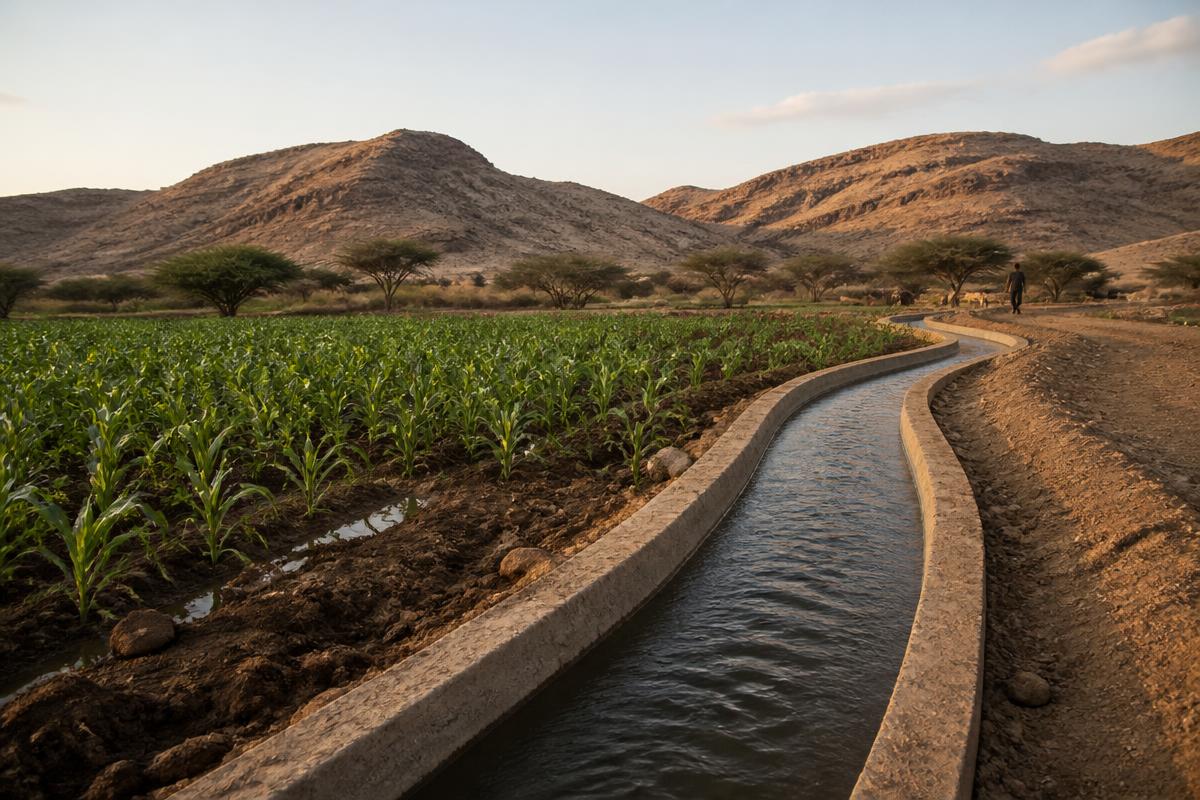
Climate finance contains a structural contradiction. The countries most exposed to drought, flood and livelihood loss often have the least administrative capacity to prepare large projects, meet fiduciary requirements and carry financial risk. Somalia illustrates this climate-fragility trap with unusual clarity.
The answer is not to relax accountability. It is to build access and accountability together: invest in Somali institutions, design programmes around local delivery, and connect humanitarian finance to longer-term resilience.
Vulnerability is high; access remains narrow
Somalia's climate risks interact with insecurity, displacement, weak infrastructure and contested natural-resource governance. Drought reduces water and pasture; floods destroy roads, farms and urban settlements; both can sharpen local conflict. The same fragility that increases need also raises the cost of preparing and supervising investments.
Somalia's 2025 climate commitment identifies agriculture, livestock, fisheries, water, health and resilient infrastructure as priorities. Turning that list into finance requires costed programmes, reliable climate data and institutions capable of carrying projects from proposal to procurement and evaluation.
The first national investment changes the argument
The Green Climate Fund's approval of the Ugbaad climate-resilient agriculture programme was a significant step: a large, Somalia-specific investment rather than another readiness exercise. It demonstrates that scale is possible when a national priority is translated into a bankable programme with an accredited partner.
It also reveals the continuing limitation. Reliance on international implementing entities can move money, but it does not automatically build direct Somali access. Each major programme should therefore include a measurable transfer of project-design, safeguards, procurement and monitoring capability.
Build an access architecture, not a project queue
The national climate authority needs stable technical staff, a transparent pipeline and a standing coordination mechanism linking finance, planning, agriculture, water and federal member states. Projects should be ranked against published criteria: vulnerability, readiness, conflict sensitivity, maintenance cost and potential to reduce future humanitarian need.
Somalia should support at least one credible domestic institution toward direct-access accreditation while improving public financial management across the wider system. Direct access is not an end in itself; it is valuable when it reduces transaction costs and gives Somali institutions responsibility for results.
Local delivery is a financial design choice
Communities experience climate risk locally, yet large funds tend to concentrate decisions nationally or internationally. Federal member states and municipalities need defined roles in selecting, delivering and monitoring investments, with grants small enough for local execution and standards strong enough for public scrutiny.
Locally led adaptation should prioritise durable public goods: water harvesting and storage, rangeland governance, climate-smart agriculture, early warning, heat-resilient urban services and shock-responsive social protection. Community participation must include authority over priorities, not consultation after projects are designed.
Bridge emergency response and adaptation
Short humanitarian cycles repeatedly finance water trucking, emergency cash and nutrition response after conditions deteriorate. Adaptation funds operate on slower timelines and often arrive after the institutions needed to absorb them have weakened. Multi-year financing should connect anticipatory action to resilient infrastructure and livelihood recovery.
A practical bridge would pre-agree triggers for emergency disbursement while reserving a share of each response envelope for assets that lower the cost of the next shock. This requires shared data and common geographic targeting across humanitarian, development and climate institutions.
A Somali financing agenda
The immediate priorities are to publish a costed national pipeline; establish federal and local windows within major programmes; fund preparation facilities for Somali institutions; require maintenance plans before capital approval; and track how much finance reaches local implementers. Conflict analysis and resource-sharing agreements should be mandatory where water or land investments may alter local power.
Climate finance will not eliminate Somalia's fragility. Properly designed, however, it can strengthen the institutions through which fragility is reduced. The measure of success is not money approved but exposure lowered, services sustained and communities able to remain productive through the next failed season.
Research record
Sources and further reading
- 1.Financing Climate Adaptation in Fragile States: A Case of SomaliaSPARC / ODI
- 2.Somalia Third Generation Nationally Determined ContributionFederal Government of Somalia / UNFCCC
- 3.FP246: Climate Resilient Agriculture in Somalia (Ugbaad)Green Climate Fund
- 4.Green Climate Fund approves funding for Somalia and IraqFood and Agriculture Organization
- 5.Somalia's climate fragility trap: Practical pathways for policy actionInternational Growth Centre
- 6.Building Urban Resilience and Transitioning to Green Economy in SomaliaUnited Nations Development Programme