Annual Review
Annual Review 2025
The year Somalia's security transition, federal contest, economic reform and climate exposure converged.
News Reporter
Yusuf
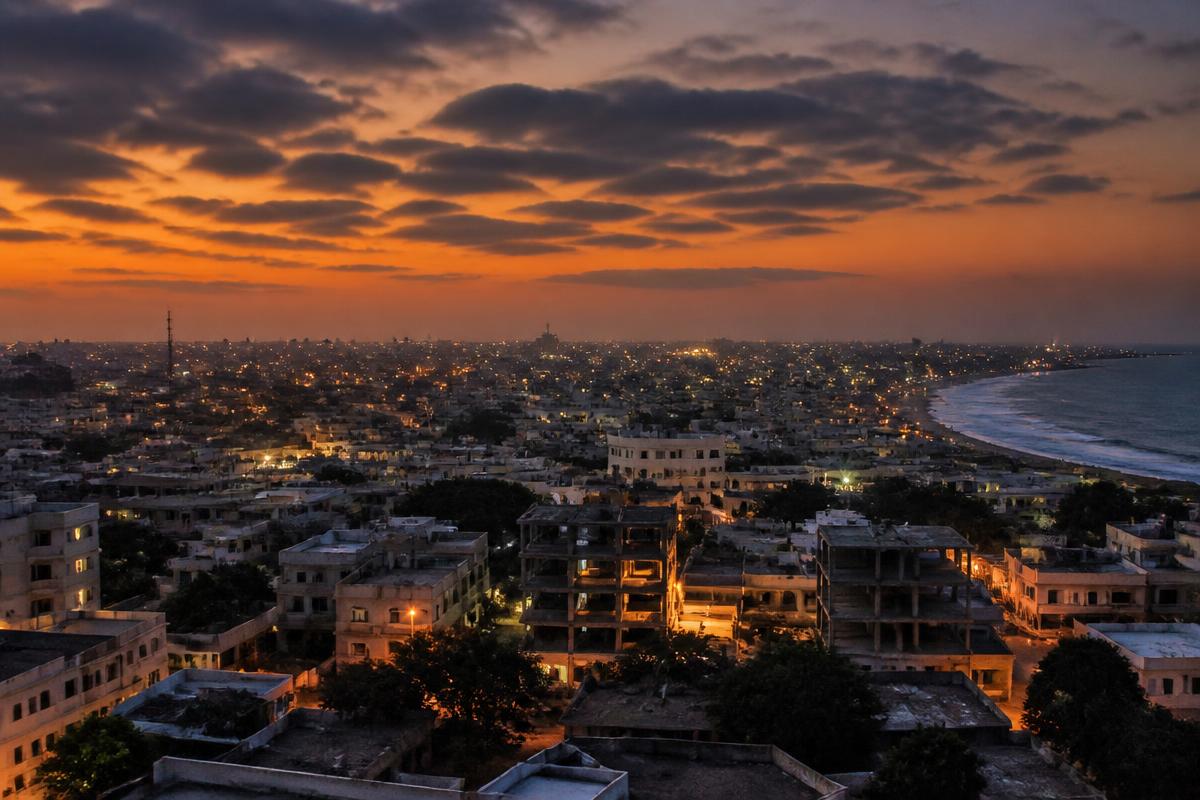
Somalia's 2025 cannot be reduced to a single crisis or achievement. The year combined continued economic reform with a renewed insurgent offensive, political disagreement with institutional ambition, and diplomatic opportunity with regional risk.
This review records the year's main turning points and the questions they carried into 2026. Where evidence remained contested at year-end, the uncertainty is part of the account.
Politics: federal disagreement hardened
Disputes over constitutional change, election design and the balance of federal and member-state authority intensified. Puntland and Jubaland remained outside key federal processes, while tensions around Gedo and other contested areas made constitutional disagreement operational rather than abstract.
The central lesson was that formal change without an accepted negotiation process can deepen rather than settle a dispute. By year-end, the model and sequencing of the 2026 elections remained unresolved, leaving political competition to shape security coordination and public administration.
Security: the insurgency recovered initiative
Al-Shabaab's Shabelle offensive exposed overstretched forces, weak holding capacity and gaps surrounding the transition to AUSSOM. The March attack on the presidential convoy underscored the group's ability to strike at the symbolic centre even when it could not displace the state from Mogadishu.
Government and partner forces prevented the most severe scenarios forecast during the year, but the campaign showed that tactical victories since 2022 had not yet produced a self-sustaining security architecture. In Puntland, operations against Islamic State-Somalia demonstrated a distinct threat requiring different local and international tools.
The international security presence changed shape
AUSSOM began under financial and political uncertainty. The transition was intended to advance Somali ownership, yet unresolved funding placed both troop contributors and Somali forces under pressure. UN support arrangements and Security Council mandates remained essential to logistics and planning.
The debate shifted from whether international forces should eventually leave to how withdrawal could occur without creating a security vacuum. Conditions, capabilities and financing mattered more than calendar commitments.
Economy: reform credibility met an aid shock
Somalia continued its post-debt-relief reform programme. Growth around four percent in 2024 and continued fiscal improvements offered a measure of stability, while the IMF programme and debt agreements strengthened the government's external position.
That stability remained shallow. Aid reductions, irregular rainfall and insecurity lowered the outlook for 2025, while a narrow tax base limited the state's ability to replace external spending. Low public debt after relief is an opportunity only if new borrowing remains transparent and supports productive capacity.
Diplomacy: sovereignty and access stayed intertwined
The consequences of the Ethiopia–Somaliland memorandum continued to shape regional diplomacy even as Turkish mediation reduced immediate confrontation. Ethiopia's search for sea access did not disappear, and Somalia's insistence on territorial integrity remained the organising principle of its response.
Türkiye, Gulf states, Egypt and other partners expanded their roles across security, infrastructure and diplomacy. The opportunity for Somalia was wider choice; the risk was that external competition would deepen fragmentation inside Somali institutions.
Climate and hunger closed the year
Failed rains led the federal government to declare a drought emergency in November. Humanitarian agencies projected millions facing acute food insecurity and nearly two million children at risk of acute malnutrition through mid-2026. The response plan remained severely underfunded.
Conditions varied across the country, and the figures were projections rather than a formal famine declaration. The policy conclusion was nevertheless clear: emergency response, water investment, livelihood protection and climate adaptation could no longer be treated as separate budgets.
What 2025 carried into 2026
Four unresolved tests defined the handover: whether political leaders could agree an electoral settlement; whether Somali forces could hold ground under a constrained AUSSOM; whether fiscal reform could survive reduced aid; and whether drought response could protect lives while building resilience.
The year ended without answers to those questions. It did, however, clarify their interdependence. Somalia's next gains will be institutional: agreements that survive political turnover, forces supported by affordable systems, and public finance that connects reform at the centre to security and services beyond it.
Research record
Sources and further reading
- 1.Somalia at a CrossroadsCombating Terrorism Center at West Point
- 2.Al-Shabaab's 2025 Offensive and Somalia's Federal CounterinsurgencyThe Soufan Center
- 3.Somalia: Third Review Under the Extended Credit FacilityInternational Monetary Fund
- 4.Somalia's Economic Prospects Are Positive, but Foreign Aid Cuts Are Downsizing GrowthWorld Bank
- 5.Somalia 2025 Drought Emergency Situation Report No. 1United Nations OCHA
- 6.Somalia Acute Food Insecurity and Malnutrition AnalysisFSNAU / IPC