
News · Politics
Eritrea Warns UN That Ethiopia’s Northern Offensive Is Part of Plan to Seize Assab
Eritrea frames the dispute as a question of territorial sovereignty rather than commercial access.

News Reporter
Grace
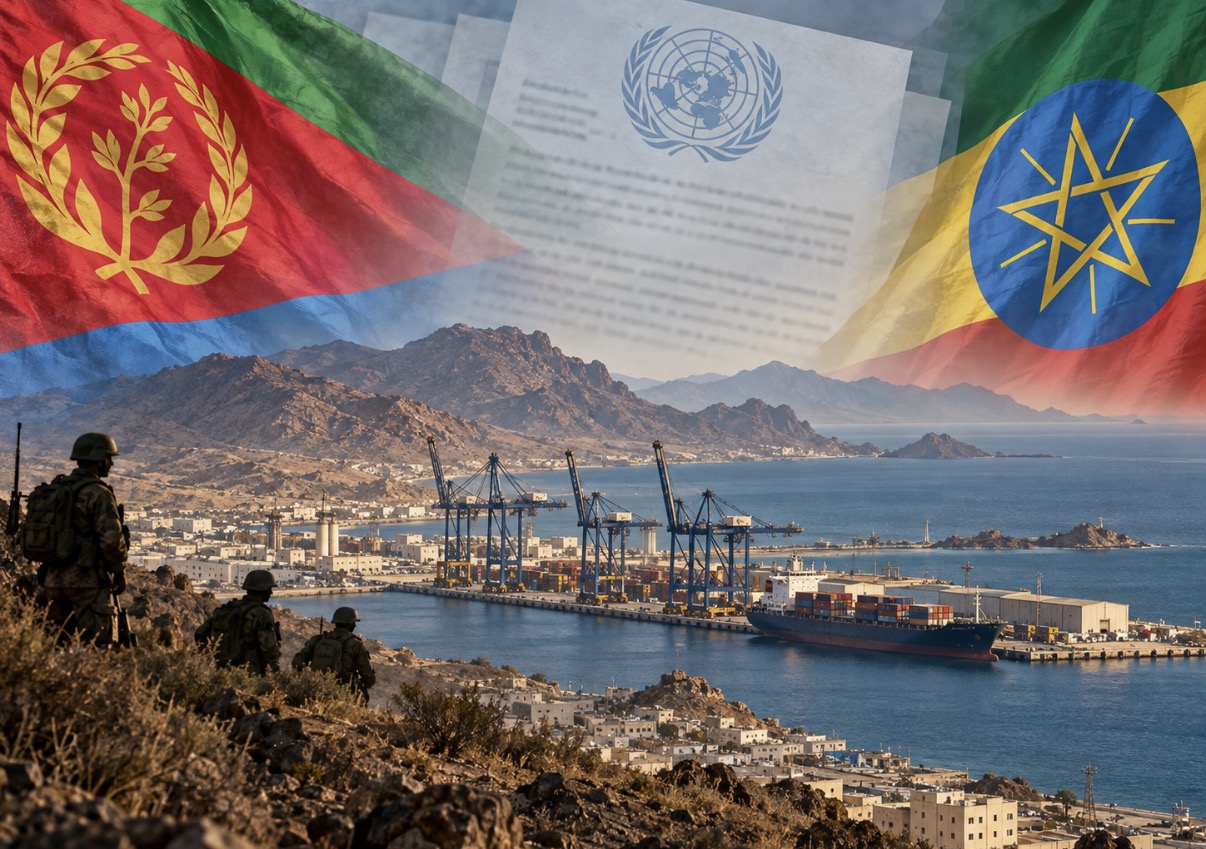
Eritrea has urged the United Nations Security Council to intervene over what it describes as an Ethiopian military campaign aimed ultimately at capturing Assab, arguing that the fighting in northern Ethiopia forms part of a broader plan to seize sovereign access to the Red Sea.
In a letter signed by Foreign Minister Osman Saleh, Asmara accuses Addis Ababa of linking its northern offensive to preparations for an invasion of Eritrea. It asks the council to condemn Ethiopia’s actions and take deterrent measures under Chapter VII of the UN Charter.
The letter presents Eritrea’s assessment of Ethiopia’s intentions. Its allegations, including a statement attributed to a senior Ethiopian commander, are not independently established by the document. Nevertheless, the appeal makes clear that Asmara views the northern conflict as a direct threat to its territory and independence.
At the centre of Eritrea’s warning is Assab, the Eritrean port that the letter identifies as Ethiopia’s alleged ultimate military objective. Asmara argues that the campaign in northern Ethiopia cannot be understood solely as an internal conflict because, in its account, Ethiopian military planning extends beyond the border.
Saleh cites remarks allegedly made on September 27 by Ethiopia’s deputy chief of staff, General Abebaw Tadesse. According to the letter, the general identified Assab as the final objective and described Mekelle, the capital of Tigray, as an intermediate stage in a wider advance towards Eritrea.
No transcript, recording or separate account of those remarks accompanies the two pages provided. The attribution therefore remains an Eritrean government allegation. It is, however, the most specific claim offered in support of Asmara’s argument that the northern offensive is connected to a planned attack on the port.
The letter also refers to an Ethiopian Foreign Ministry communication to the Security Council on October 9, 2026. Eritrea says Addis Ababa informed the council that it was taking measures that Asmara interprets as preparations to carry out aggression against Eritrea.
Saleh rejects Ethiopia’s reported reliance on self-defence, arguing that such a justification cannot legitimise military action against a sovereign neighbouring state. The Ethiopian communication itself is not included in the supplied material, leaving its precise wording and supporting arguments outside the available record.
Eritrea frames the dispute as a question of territorial sovereignty rather than commercial access. It accuses Ethiopia of pursuing control over coastline by force and argues that this would violate Eritrea’s territorial integrity, independence and the principles of the UN Charter.
That distinction is central to the letter. Arrangements allowing a country to use a neighbour’s port would leave sovereignty with the coastal state. Eritrea’s allegation concerns something more far-reaching: an attempt to acquire sovereign access through military action, with Assab identified as the intended target.
Asmara says it has repeatedly warned the international community about this danger over the past three years. It further alleges that Ethiopian threats have challenged not only Eritrea’s borders but also its independence, presenting the current offensive as the operational extension of an established political agenda.
The foreign minister invokes international statements marking the 25th anniversary of the Algiers Agreement in December 2025. According to his letter, those statements stressed respect for Eritrea’s sovereignty and territorial integrity. He argues that Ethiopia disregarded those appeals and incorporated an invasion plan into its northern military campaign.
Addressed to Ambassador Aglaia Balta, Greece’s permanent representative to the United Nations, the appeal seeks a response beyond expressions of concern. Eritrea asks the Security Council to use its authority to deter the alleged threat before it develops into a wider interstate conflict.
Saleh warns that war would bring severe destruction to both countries and destabilise the wider region. The letter does not provide battlefield details, troop numbers or a timetable for an alleged advance towards Assab. Its emphasis is on Ethiopia’s intentions as understood and presented by Eritrea.
The document shows how firmly Asmara now connects the fighting in northern Ethiopia to its own security. By placing Assab at the centre of its appeal, Eritrea is asking the Security Council to treat the offensive as a potential precursor to cross-border war, rather than viewing it only through the lens of Ethiopia’s internal conflict.