
News · Politics
Egypt, Sudan, Eritrea and Somalia Reject Somaliland Recognition at El Alamein Summit
The communiqué set out common positions on several regional disputes while calling for closer political, economic and trade cooperation among the four countries.

News Reporter
Abdi
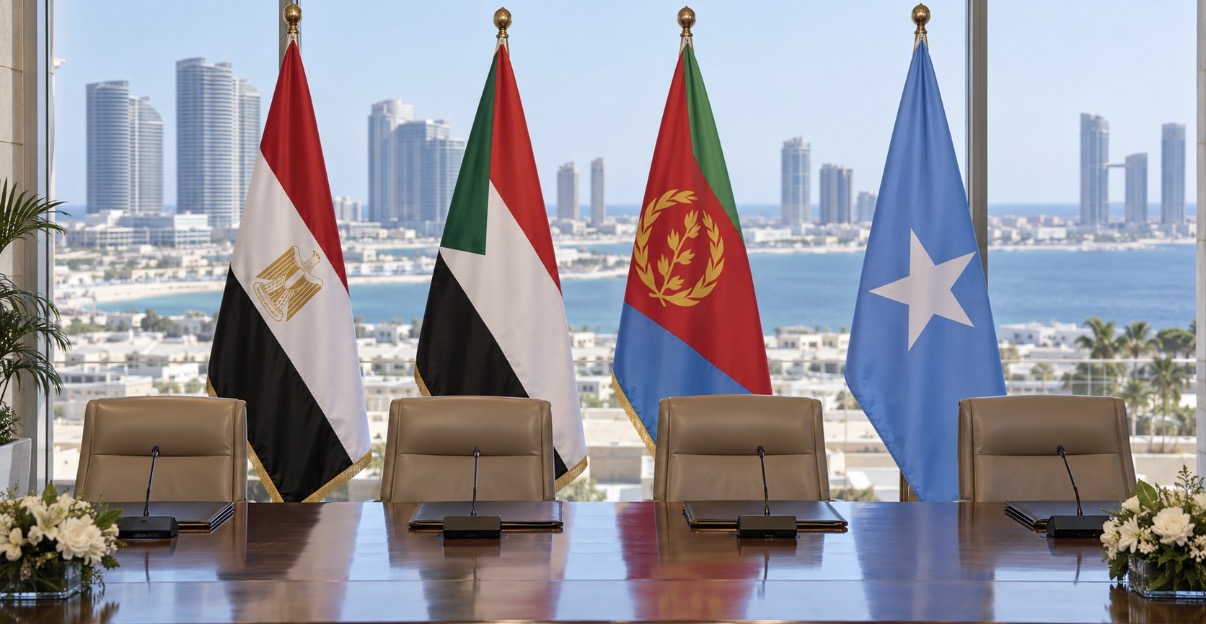
The leaders of Egypt, Sudan, Eritrea and Somalia rejected recognition of Somaliland and the establishment of parallel entities in Sudan during a summit on Sunday that also addressed Red Sea security, Nile water rights and Somalia’s fight against terrorism.
In a joint communiqué issued after their meeting in New El Alamein City, the four leaders affirmed respect for national sovereignty and territorial integrity. They rejected interference in the internal affairs of regional states and agreed to establish a mechanism to follow up on the summit’s decisions.
Egyptian President Abdel Fattah El-Sisi hosted Somali President Hassan Sheikh Mohamud, Eritrean President Isaias Afwerki and Sudan’s Transitional Sovereignty Council chairman, Abdel Fattah Al-Burhan.
The communiqué set out common positions on several regional disputes while calling for closer political, economic and trade cooperation among the four countries.
On Somalia, the leaders rejected any recognition of or support for Somaliland, saying such actions would infringe on the Federal Republic of Somalia’s sovereignty and territorial integrity. They also opposed interference or measures intended to undermine the country’s national sovereignty.
The statement backed Somalia’s efforts to combat terrorism and extend the authority of state institutions across its territory.
The leaders called on regional and international partners to provide adequate, sustainable and predictable funding for the African Union Support and Stabilization Mission in Somalia. They said that support was necessary to help the mission fulfil its mandate and facilitate an orderly transfer of security responsibilities to Somali forces.
The funding appeal linked continued support for the African Union mission to Somalia’s security transition, placing the eventual transfer of responsibility to national forces at the centre of the summit’s position.
On Sudan, the four countries affirmed support for the country’s unity, sovereignty, territorial integrity and national institutions. They rejected the establishment of parallel entities and called for the resumption of a political process under Sudanese ownership and leadership.
The communiqué also expressed complete rejection of support for mercenaries. It did not identify particular groups or countries in that provision.
Red Sea security formed another part of the agreement. The leaders reaffirmed freedom of navigation and stated that governance of the Red Sea was the exclusive responsibility of its littoral states.
Their position placed coastal countries at the centre of decisions concerning the waterway, although the communiqué did not set out a maritime security arrangement or specify how that principle would be implemented.
On the Nile, the leaders called for respect for international law governing transboundary rivers. They highlighted the principle of causing no significant harm and the obligation to cooperate through prior notification, consultation and agreement.
They rejected unilateral measures that adversely affect the existing water uses of the two downstream Nile states, Egypt and Sudan. The communiqué did not name a particular dam or country in its water provisions.
Beyond security and sovereignty, the summit endorsed stronger economic, trade and cultural relations. The leaders said closer cooperation should advance regional connectivity, economic integration and sustainable development.
They also agreed to maintain consultation with other African countries.
The follow-up mechanism established by the summit is intended to sustain coordination among the four governments. The communiqué said the consultative summit would convene periodically and whenever necessary, but gave no date for the next meeting.