
News · Politics
Abiy Tests Political Loyalties as Power Struggles Reshape Ethiopia’s Oromia Region
Although Abiy initially benefited from widespread Oromo support, disagreements over regional autonomy, political representation, and federal authority have contributed to divisions within the region.

News Reporter
Fadumo
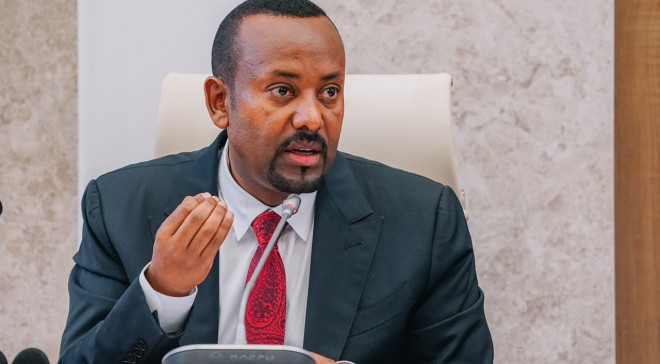
Ethiopia — Ethiopian Prime Minister Abiy Ahmed is navigating growing political uncertainty within his ruling establishment as renewed fighting in northern Ethiopia complicates plans for a government reshuffle and raises questions about the balance of power in Oromia, the country's largest regional state.
The prime minister's efforts to consolidate his administration appear increasingly tied to trusted political and security officials, including figures associated with the Information Network Security Administration (INSA), where Abiy served before rising to national leadership.
At the center of the political calculations is Oromia President Shimelis Abdisa, who has retained his position despite speculation about changes within the regional leadership.
His continued presence suggests that Abiy is approaching any restructuring cautiously, particularly as the federal government confronts expanding security challenges across several regions.
The latest uncertainty follows the resumption of major hostilities in northern Ethiopia, where renewed confrontation involving federal forces, Tigrayan factions and Eritrea has undermined the fragile political settlement established after the 2020–2022 civil war.
The escalating conflict has changed the political environment in Addis Ababa, making internal unity within the ruling Prosperity Party an increasingly important consideration.
Oromia at the center of political calculations
Oromia holds particular importance in Ethiopia's political system. The region surrounds the federal capital, Addis Ababa, and has played a central role in the political developments that brought Abiy to power in 2018.
However, the relationship between the prime minister and Oromo political movements has become increasingly complicated.
Although Abiy initially benefited from widespread Oromo support, disagreements over regional autonomy, political representation and federal authority have contributed to divisions within the region.
Shimelis Abdisa, who became Oromia president in 2019, has remained a prominent figure within the Prosperity Party and an important political partner of the federal administration.
His survival amid discussions of a leadership reshuffle raises questions about the degree of influence he continues to exercise and whether his position reflects genuine political strength or a temporary accommodation.
For Abiy, replacing Oromia's leadership during a period of renewed national conflict could carry significant risks.
Any abrupt change might unsettle the regional administration, complicate security coordination, or deepen existing divisions within the ruling party.
Keeping Shimelis in office, at least for now, allows the prime minister to preserve institutional continuity while assessing the changing political environment.
Security establishment gains importance
The renewed emphasis on trusted security figures reflects Abiy's longstanding connections to Ethiopia's intelligence institutions.
Before becoming prime minister, Abiy served as deputy director of INSA, an agency responsible for cybersecurity and information security.
That background remains relevant to assessments of his governing style, particularly during periods of instability.
As military pressure increases, officials with intelligence, security and administrative experience may become more influential in shaping government decisions.
A stronger reliance on such figures could also indicate a shift toward centralized decision-making within the federal executive.
However, the precise composition of any forthcoming reshuffle remains uncertain, and there has been no independently established list of appointments confirming a wider return of former INSA officials to senior government positions.
The political significance of any changes will depend on whether Abiy promotes established loyalists, brings in new regional figures or attempts to balance competing interests within the Prosperity Party.
Northern conflict changes the political equation
The resurgence of fighting in Tigray has added urgency to the government's internal political calculations.
In September, seven Ethiopian armed organizations announced an alliance against Abiy's administration, bringing together groups with different political objectives and longstanding grievances against the federal government.
The coalition includes the Tigray People's Liberation Front, the Amhara Fano National Movement and the Oromo Liberation Army, alongside several other organizations.
Although their military coordination and long-term political cohesion remain uncertain, their announcement has widened the challenges facing Addis Ababa.
The government must now contend with simultaneous security threats while maintaining discipline within its political and administrative structures.
Tensions with Eritrea have further complicated the situation, raising concerns that Ethiopia's domestic conflict could develop into a broader regional confrontation.
These developments leave Abiy with difficult choices.
A sweeping reshuffle might strengthen his control over important institutions, but it could also expose internal disagreements at a moment when the government needs political stability.
Delaying major appointments, meanwhile, may preserve unity in the short term without resolving deeper struggles over influence.
Shimelis faces an uncertain political future
For Shimelis Abdisa, remaining in office does not necessarily guarantee his long-term position.
Oromia's leadership must manage persistent insecurity, political grievances and the competing demands of federal and regional authorities.
The Oromo Liberation Army continues to challenge government control in parts of the region, while broader opposition to Abiy's administration has intensified.
Against this background, the Oromia presidency remains both an influential political office and a potentially vulnerable position.
The coming reshuffle, if it proceeds, could reveal whether Shimelis retains Abiy's confidence or whether the prime minister intends to redistribute authority without immediately removing him.
More broadly, the leadership decisions will provide an indication of how Abiy intends to govern during one of the most difficult periods of his premiership.
For now, the renewed northern conflict appears to have made political continuity more valuable than abrupt change.
But the underlying question remains unresolved: whether Abiy can maintain the loyalty of his regional and security establishments while confronting a widening military and political crisis.
In Oromia, the fact that its president remains in office may be less significant than how much authority he will continue to exercise as Addis Ababa's political priorities shift.